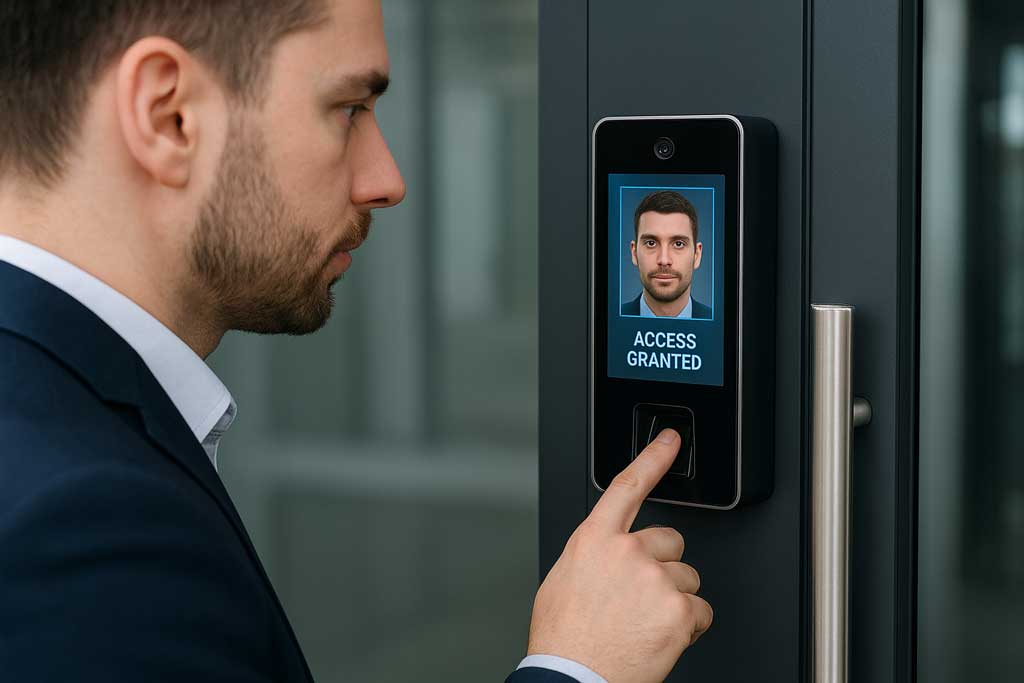
Security has always been a top priority for businesses, but traditional methods such as keys, swipe cards, and PIN codes are increasingly seen as vulnerable or inconvenient. In response, organisations are turning to smarter, more reliable technologies to protect their premises and data. One solution gaining significant traction is biometric access control, which uses unique biological traits to verify identity and manage entry. By relying on fingerprints, facial recognition, or iris scans, biometric systems offer a level of security that is difficult to replicate or bypass.
Biometric access control works by capturing an individual’s physical characteristics and storing them securely within a system. When access is required, the system compares the live scan with stored data to grant or deny entry. This removes the need for physical credentials, reducing the risk of lost cards or stolen passwords.
How Biometric Access Control Works In Practice
At its core, biometric access control combines hardware and software to authenticate users quickly and accurately. Devices such as fingerprint scanners, facial recognition cameras, or iris readers are installed at entry points, while backend systems manage user data and permissions.
When an employee or authorised visitor attempts to enter a secured area, the system scans their biometric data and cross-references it with its database. If there is a match, access is granted almost instantly. This seamless process not only improves security but also enhances user convenience, as there is no need to remember codes or carry access cards.
Modern systems can also integrate with wider security infrastructure, including CCTV, alarm systems, and time and attendance tracking. This allows businesses to create a comprehensive, centralised security solution.
Key Uses Of Biometric Access Control In Business
Biometric access control is versatile and can be applied across a wide range of industries and environments. Its ability to provide secure, reliable identification makes it particularly valuable in high-risk or sensitive settings.
Common applications include:
- Office buildings, where access can be restricted to authorised personnel only
- Data centres, where protecting sensitive information is critical
- Healthcare facilities, where patient data and controlled substances must be safeguarded
- Manufacturing sites, where restricted areas require strict entry control
- Educational institutions, where student and staff safety is a priority
In each of these settings, biometric access control helps ensure that only the right individuals can access specific areas, reducing the likelihood of unauthorised entry.
The Benefits Of Biometric Access Control For Businesses
One of the primary advantages of biometric access control is its enhanced level of security. Unlike traditional methods, biometric identifiers cannot be easily shared, duplicated, or stolen. This significantly reduces the risk of security breaches.
Another key benefit is improved efficiency. Employees no longer need to carry access cards or remember passwords, streamlining entry processes and reducing administrative overhead. For businesses with large workforces, this can result in considerable time and cost savings.
Biometric systems also provide accurate audit trails, allowing organisations to monitor who accessed certain areas and when. This can be particularly useful for compliance, investigations, and overall security management.
Additionally, biometric access control can support flexible working environments. With secure, contactless authentication methods such as facial recognition, businesses can maintain hygiene standards while enabling smooth access for employees and visitors.
Is Biometric Access Control The Future Of Workplace Security?
As technology continues to evolve, biometric access control is becoming more sophisticated and accessible. Advances in artificial intelligence and machine learning have improved accuracy and reduced the likelihood of false positives or negatives.
Businesses are also increasingly recognising the value of integrating biometric systems with other digital solutions, creating smarter, more connected workplaces. From automated attendance tracking to real-time security alerts, biometric access control is playing a key role in modern security strategies.
While there are considerations around data privacy and compliance, reputable providers ensure that biometric data is encrypted and stored securely, helping businesses meet regulatory requirements such as GDPR.
As threats to physical and digital security grow more complex, adopting advanced solutions like biometric access control is no longer just an option—it is becoming a necessity for forward-thinking organisations.
Featured image credit: AI generated.