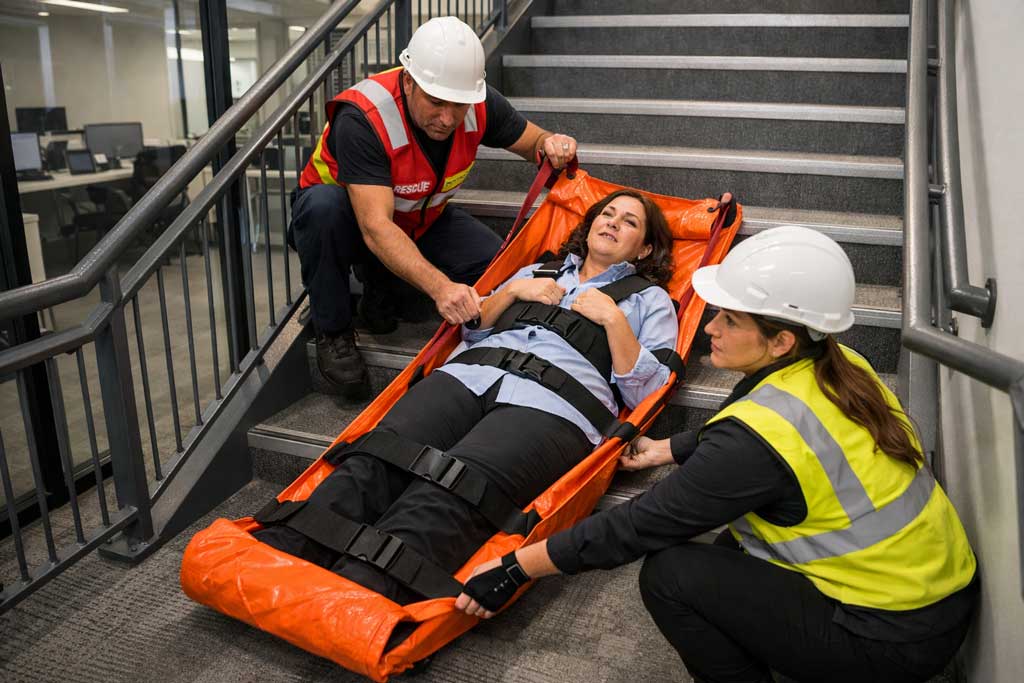
In high-pressure environments such as hospitals, laboratories and multi-storey office buildings, technology-driven safety systems often make the difference between calm evacuation and chaos. Among these systems, evacuation chairs stand out as a blend of mechanical engineering and lifesaving design—allowing mobility-impaired individuals to be transported swiftly and safely in an emergency. Yet the real cornerstone of performance lies in evacuation chair servicing, where precision maintenance ensures the equipment works flawlessly when most needed.
Evacuation chairs depend on robust materials, friction control and load distribution—hallmarks of good engineering. Servicing is the process that keeps these mechanical variables within tolerance, ensuring smooth descent, reliable braking and comfort for users. A chair that hasn’t been serviced risks unpredictable mechanical failure, undermining every safety plan it forms part of.
Mechanical Integrity: Why Engineering Precision Matters
Every evacuation chair uses an engineered system of rollers, tracks and support frames designed to handle significant stress. Over time, constant exposure to humidity, temperature variations or vibration can affect these parts. Regular evacuation chair servicing identifies early mechanical fatigue and material wear, focusing on components like bearings, fastenings and tension belts.
Engineers conducting servicing apply diagnostic techniques similar to those used in aircraft and lift maintenance—stress tests, torque validation, and load simulations. By recalibrating or replacing components proactively, they preserve the structural integrity that underpins safe operation. In this context, servicing isn’t just routine maintenance; it’s the application of engineering precision to sustain longevity and reliability in equipment built to safeguard lives.
The Science Behind Reliable Descent Systems
The most sophisticated evacuation chairs rely on friction-based descent technology—a clever engineering balance where controlled kinetic energy ensures passenger safety during downward movement. Servicing examines these descent systems with acute technical detail, assessing roller alignment, lubricant consistency and track condition.
Technicians measure friction levels using calibrated instruments that resemble those used in tribology—the science of wear and lubrication. This data contributes to predicting performance under different loading conditions, ensuring each chair performs optimally across real-world scenarios. In an emergency, when controlled deceleration matters most, science and servicing converge to guarantee stability and speed.
Data Meets Safety: Servicing Documentation And Compliance
Behind every piece of serviced equipment sits meticulous data collection. Evacuation chair servicing involves thorough inspection reports, part replacement records and compliance certificates. These documents trace each engineering intervention, offering accountability and traceability that align with modern building safety legislation.
From an engineering perspective, this data-driven approach allows continuous improvement. The feedback loop from servicing outcomes can inform design refinements in future models—stronger coil springs, improved braking surfaces, lighter alloys. In effect, the servicing process fuels the evolution of safer, more efficient evacuation technology.
Keeping Technology Ready For Critical Moments
Evacuation systems represent the intersection of human factors and mechanical design. Servicing ensures each of those factors behaves predictably under high-stress conditions. For engineers, regular evacuation chair servicing acts as an ongoing validation of both product design and operational safety protocols.
Consider a university research building where several hundred occupants rely on well-maintained evacuation equipment. Annual servicing confirms not only technical readiness but also compliance with rigorous safety standards dictated by engineering ethics and public safety codes. Without these checks, mechanical uncertainties could compromise emergency response capability—and that’s a variable no building manager can afford.
Precision Servicing As Preventive Engineering
At its core, evacuation chair servicing embodies the engineering mindset of prevention over reaction. By maintaining mechanical and structural integrity, engineers transform potential weaknesses into predictable strength. It’s an act of resilience engineering—anticipating stress, modelling wear and ensuring dependable operation when it’s needed most.
Whether in laboratories, public buildings or high-rise offices, precision servicing ensures that every bolt, roller and bracket is functioning within the exact parameters designed for safety and stability. It’s proof that intelligent engineering doesn’t stop at design—it continues in the hands of those maintaining the technology that keeps people safe every day.
Featured image credit: AI generated.